Sensorineural Hearing Loss
Sensorineural hearing loss occurs when there is a problem with the sensory

We Bring Hearing to Life!
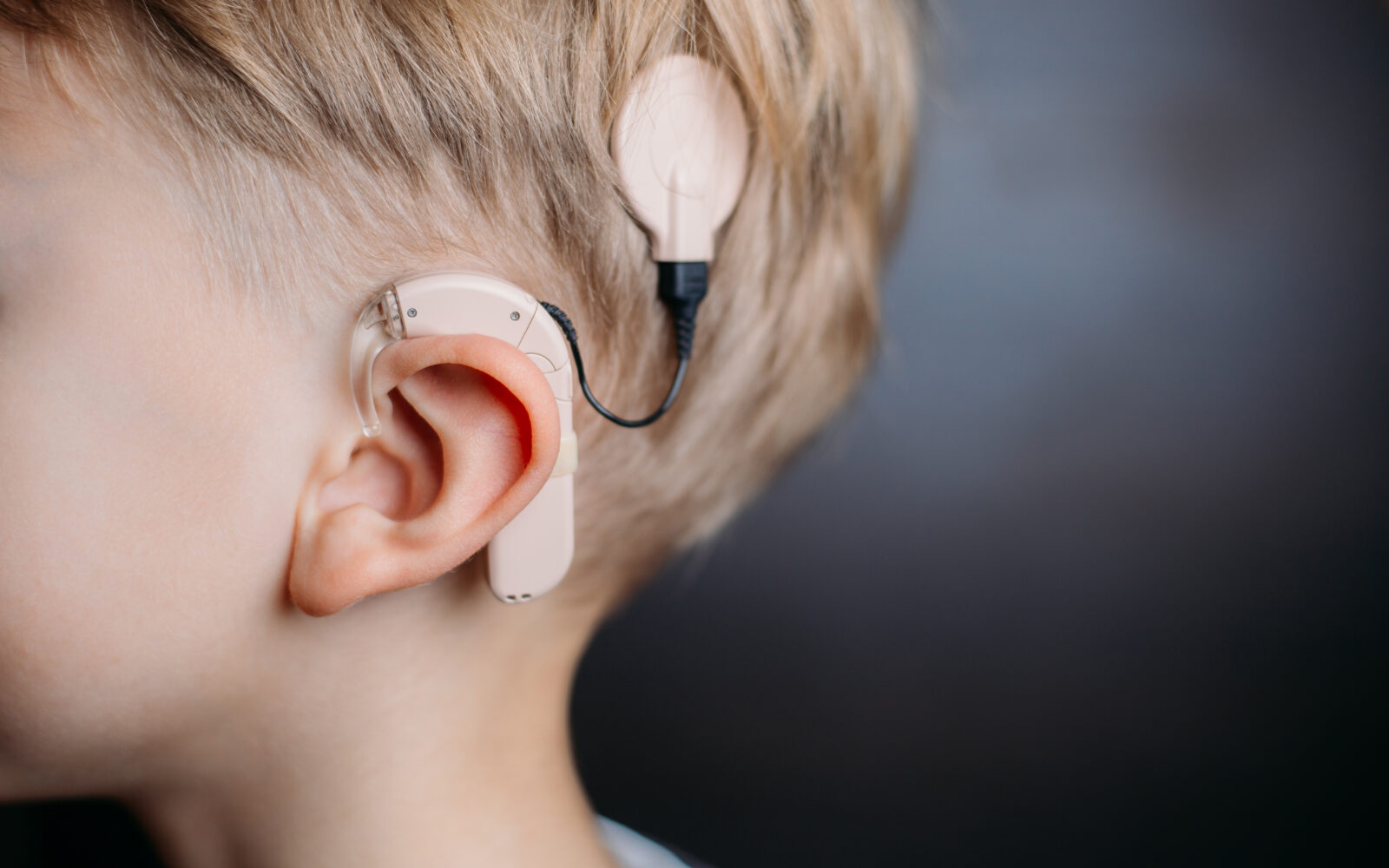
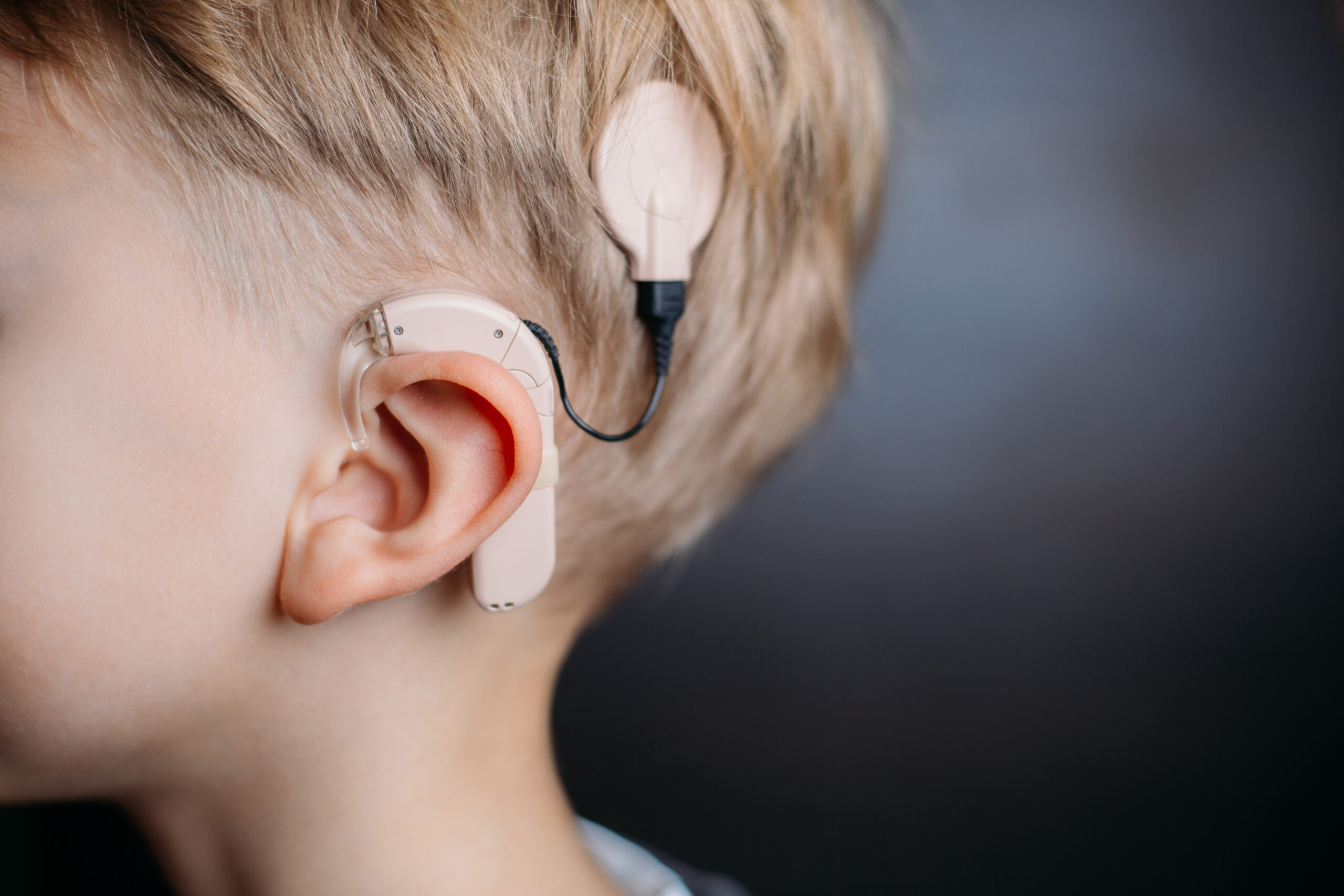
A cochlear implant is a sophisticated electronic medical device that can help people with severe-to-profound sensorineural hearing loss or those who are profoundly deaf to understand speech. Cochlear implants do not restore normal hearing. And they’re not hearing aids. In fact, they work in an entirely different way.
Hearing aids amplify sound for people with damaged hearing. Cochlear implants do not. Instead, they bypass the damaged cochlea—essentially doing the work for it—and stimulate the auditory nerve directly through the application of electrical current. The brain then receives the signals and interprets them as sound.
Cochlear implants have several components. The implant itself is internal and placed in the inner ear, also called the cochlea. The external part is hooked over and worn behind the ear, although some of its parts can be worn in a pocket or carrying garment, such as a belt pouch. The internal portion contains a magnet to keep the external portion properly aligned.
The external portion of a cochlear implant includes a microphone(s), a sound or speech processor, and a transmitter that together work to capture sound and convert it into digital code that is then transmitted through the skin to the internal implant. The implanted portion includes a receiver that picks up the code and changes it to electrical impulses. These impulses stimulate the auditory nerve, which, in turn, delivers them to the brain, where they’re interpreted and actual hearing occurs.
Because cochlear implants are not a one-for-one replacement for normal hearing, it takes time to adjust to them and learn, or relearn, how to process sound. Auditory rehabilitation helps people with cochlear implants relearn and better develop listening and language skills. This typically involves speech-language pathologists and audiologists.
As with hearing aids, many people with cochlear implants have them in both ears (bilateral), which many experts say provides greater benefit in distinguishing speech in noise and the direction of sound. Individuals who have more residual hearing in one ear than another may use a hearing aid in one ear and a cochlear implant in the other.
According to the NIDCD, roughly 58,000 adults and 38,000 children in the United States have received cochlear implants as of December 2012.
The criteria for candidacy for a cochlear implant has broadened over the years, in part due to ongoing research. When the U.S. Food and Drug Administration (FDA) approves new devices, it sets general candidacy requirements, including age. But the evaluation and decision making processes involve a team of medical specialists, including a surgeon with expertise in cochlear implantation.
In the past, candidates for cochlear implants included both children and adults who were either deaf or had severe-to-profound hearing loss and didn’t get adequate benefit from hearing aids.
According to the American Cochlear Implant (ACI) Alliance:
In general, if someone wearing appropriately fit hearing aids cannot understand speech without seeing the speaker’s face, they should be evaluated for a cochlear implant.
Cochlear implant candidacy guidelines have changed to include children and adults with more residual hearing as well as other anatomic, health, and learning issues that would have been considered “absolute” or “relative” contraindications in the past.
An assessment of any child with a severe-to-profound hearing loss should be made as early as possible, as outcomes with a cochlear implant are significantly better in children who receive an implant at the earliest possible age.
Anyone who wishes to determine if they’re a candidate needs to arrange for an evaluation at a center specializing in cochlear implants. The ACI Alliance provides useful information on where to go for an evaluation and on the cochlear implant process. An ENT or an audiologist also can provide a referral to a cochlear implant center for an evaluation.
The evaluation for a cochlear implant typically includes a medical exam, imaging studies, audiological testing, and psychological testing, along with counseling so there is a clear understanding of the follow-up commitment involved. Counseling also helps ensure realistic expectations regarding the performance of the cochlear implant. It’s important to note that functional benefit to hearing ability from a cochlear implant varies from person to person. Because cochlear implants can help people with a range of hearing loss, the individual’s experience depends on the degree of hearing loss, how long the person has been without their hearing, speaking ability, and rehabilitation training.
People who receive cochlear implants are not fitted with the external component until about four to six weeks after the surgery, when the audiologist activates the implant and begins programming it to the individual’s specific hearing needs. There are subsequent appointments over several months for adjustments and fine-tuning, as well as for rehabilitation therapy and training.
While cochlear implants can help people with certain degrees of sensorineural hearing loss, there are other implantable devices to address conductive hearing loss, when there are mechanical issues with the ear.

Sensorineural hearing loss occurs when there is a problem with the sensory

Dizziness is a symptom not a disease. It may be defined as a sensation of

Tinnitus is commonly described as a ringing, buzzing, whooshing or hissing