Sensorineural Hearing Loss
Sensorineural hearing loss occurs when there is a problem with the sensory

We Bring Hearing to Life!
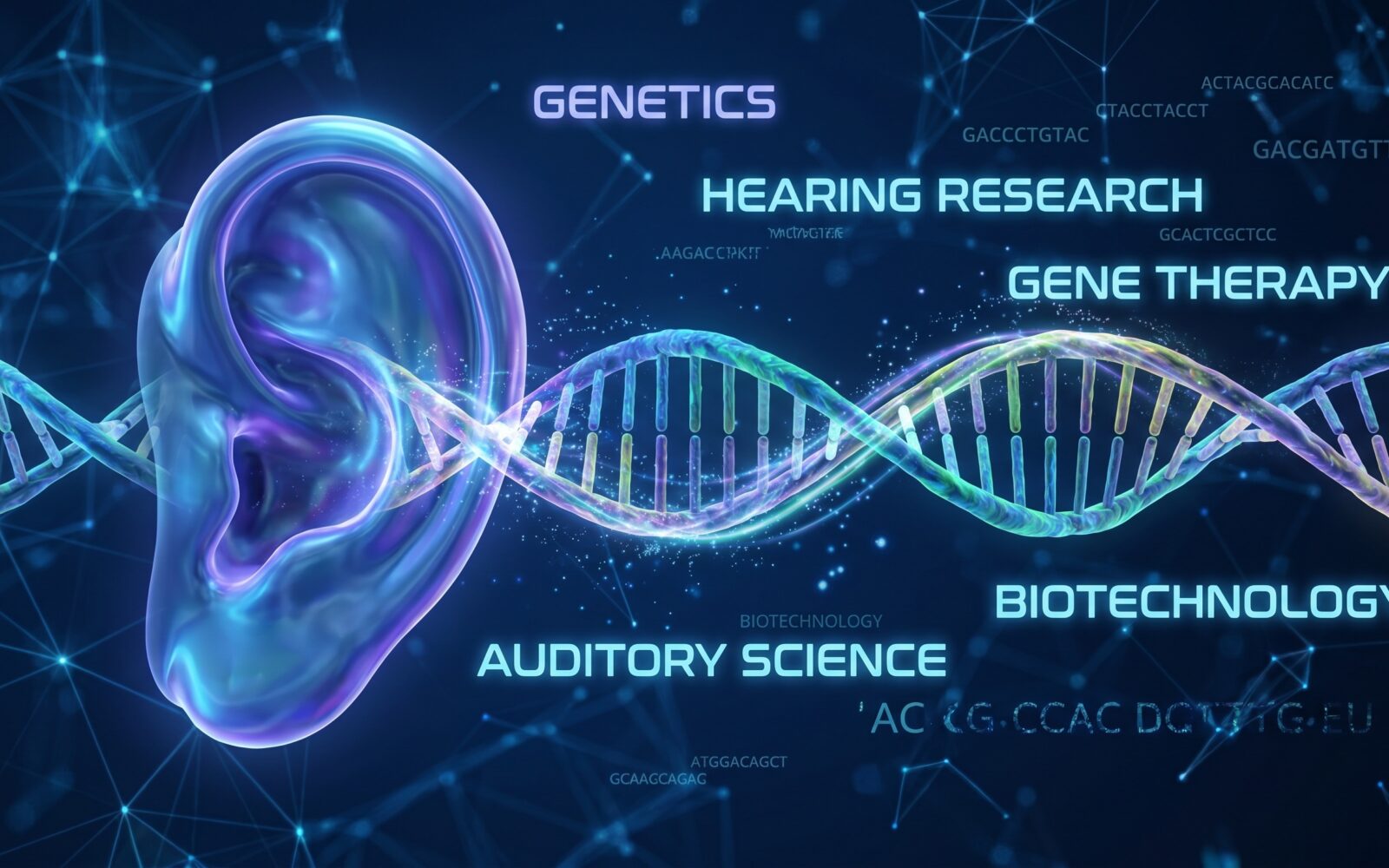
Of every 1,000 babies born in the United States, an estimated 3 to 4 will have permanent congenital hearing loss (National Center for Hearing Assessment and Management, 2010). Genetic causes are implicated in roughly half of these cases, with the other half being attributable to environmental causes (Rehm, 2005; Smith, Bale, & White, 2005). Genetic forms of hearing loss can be syndromic, indicating other physical features are seen alongside the hearing loss, or nonsyndromic, meaning hearing loss is the only finding. Among genetic forms of hearing loss, approximately 30% of cases are syndromic and 70% are nonsyndromic (Keats, 2002; Smith et al., 2005). More than 400 genes responsible for hearing loss have been identified (Toriello, Reardon, & Gorlin, 2004); most are part of a syndrome. Identifying the cause of the hearing loss can benefit patients and their families by uncovering other health risks, estimating recurrence risks for future offspring, and indicating other family members who may be at risk. Genes are located on the DNA of individuals. Genes are carried on chromosomes, which are passed down from parent to child. With few exceptions, each cell in the human body contains 46 chromosomes. Egg and sperm cells contain half, or 23 chromosomes, restoring the chromosomal number to 46 in the newly formed zygote. This arrangement specifies an individual will have two copies of every gene: one from each parent. One pair of chromosomes—designated sex chromosomes—confers gender. The remaining 22 pairs, referred to as autosomes, are numbered from 1 to 22, in descending order roughly according to size.
Patterns of Inheritance
Genetic disorders can be inherited in different ways: autosomal dominant, autosomal recessive, X-linked, and mitochondrial patterns of inheritance. In an autosomal dominant pattern of inheritance, a child inherits a normal copy of a gene from one parent and an abnormal gene from the other parent. The abnormal gene dominates the normal gene, so one copy of an abnormal gene is enough to cause an autosomal dominant disorder. Waardenburg syndrome is the most common cause of autosomal dominant syndromic hearing loss, affecting 1 in 42,000 people (Read & Newton, 1997). When a parent has Waardenburg syndrome, each child of that parent has a 50% chance of being affected by Waardenburg syndrome, assuming the other parent does not have the syndrome. The other 50% of offspring in this mating will be unaffected. Typical features of Waardenburg syndrome include sensorineural hearing loss, a white forelock, pale blue or differently colored eyes, and widely spaced eyes. A great deal of variable expressivity exists in Waardenburg syndrome, such that patients may have any combination of features, including normal hearing (de Sousa Andrade et al., 2012). Waardenburg syndrome accounts for approximately 2% of cases of profound congenital hearing loss (de Sousa Andrade et al., 2012). It should be noted that, in rare cases, some autosomal dominant disorders occur due to a new mutation in the child and neither parent has the disorder.
When a disorder is passed on in an autosomal recessive fashion, two copies of the abnormal gene are required to cause the disorder. Individuals who inherit only one abnormal gene and one normal gene are referred to as carriers and are not affected by the disorder. Carriers frequently are unaware of their carrier status until they have an affected child. Individuals affected by an autosomal recessive disorder usually are the result of matings between two carriers. Consanguinity, or the presence of a common ancestor between mates, increases the risk of an autosomal recessive disorder. Usher syndrome demonstrates an autosomal recessive pattern of inheritance. The prevalence of Usher syndrome is 3 to 4 per 100,000 (Ahmed, Riazuddin, Riazuddin, & Wilcox, 2003), with higher prevalence rates in certain populations, including the Acadian population in Louisiana (Ouyang et al., 2003) and the Ashkenazi Jewish population (Guha et al., 2012). The most severe type of Usher syndrome is characterized by congenital profound sensorineural hearing loss and progressive vision loss (Liu et al., 2013). Securing an early diagnosis of Usher syndrome can help patients prepare for their futures. Usher syndrome may account for half of all cases of concurrent deafness/blindness (Yan & Liu, 2010).
Sensorineural hearing loss occurs when there is a problem with the sensory

Dizziness is a symptom not a disease. It may be defined as a sensation of

Tinnitus is commonly described as a ringing, buzzing, whooshing or hissing